Home Food Business in Quebec
Quebec has no cottage food exemption. To sell food you make at home, you need a MAPAQ food permit before you start. Home kitchens can handle up to 100 kg of food a month, sold directly to consumers, and labels must be in French.
Last reviewed October 15, 2026 against 10 official sources
Know the rules? Run the bake day in BakeryFlow.
Plan the menu, take pre-orders, and bake from one list. That is what this home bakery app is built for. When you turn on tax, use the sales tax guide to find your official rate source.
Quebec Home Food Business Overview
Quebec doesn't have a cottage food exemption. MAPAQ (the Ministère de l'Agriculture, des Pêcheries et de l'Alimentation) treats making food for sale in a home kitchen like other food businesses, with a few extra conditions for home kitchens.
You need a MAPAQ food permit before you start selling, even online
Making food for sale at home usually needs the restaurant (restauration) permit
Home kitchens are limited to 100 kg of food a month
Sell directly to consumers only, not to grocery stores or other wholesale buyers
Someone with MAPAQ's food establishment manager training must oversee hygiene
Labels must be in French under the Charter of the French Language
Check with your municipality that a food business is allowed at your address
What You Can (and Can't) Sell
- Baked goods (breads, cookies, cakes, pastries)
- Candy and confections
- Jams and preserves
- Other foods covered by your MAPAQ permit, prepared under food hygiene and cold-chain rules
- More than 100 kg of food a month from a home kitchen
- Products that need their own specialized permit, like dairy products or wholesale meat (check MAPAQ's permit list)
Sales Limits & Locations
100 kg of food a month (no dollar cap)
MAPAQ doesn't set a dollar limit, but a home kitchen permit holder can handle no more than 100 kg of food a month. Once your sales pass $30,000, you'll need to register for GST and QST.
- Direct to consumers from your home
- Public markets and events (permit required)
- Online orders (permit still required)
- Sell directly to consumers only
- No sales to grocery stores or other wholesale buyers
- No more than 100 kg of food a month
- Display your permit where customers can see it
Comparing provinces? See sales limits in every province we cover.
Requirements & Regulations
You need a MAPAQ food permit before you start. Making food for sale in a home kitchen is treated as restaurant activity, so it usually needs the restaurant (restauration) permit; dividing products into smaller portions for resale needs the retail (vente au détail) permit. Permits last one year and have an annual fee, plus a file-opening fee the first time.
Your home kitchen must meet the hygiene and sanitation standards for food establishments, including the cold chain. MAPAQ enforces these rules; ask its permit service what to expect.
Hygiene and sanitation must be overseen by someone who holds MAPAQ's food establishment manager (gestionnaire) attestation. Since July 8, 2025, you no longer have to give the attestation number when you apply.
Not part of the MAPAQ permit conditions. Consider liability insurance anyway.
Before you apply, check with your municipality that a food business is allowed at your address.
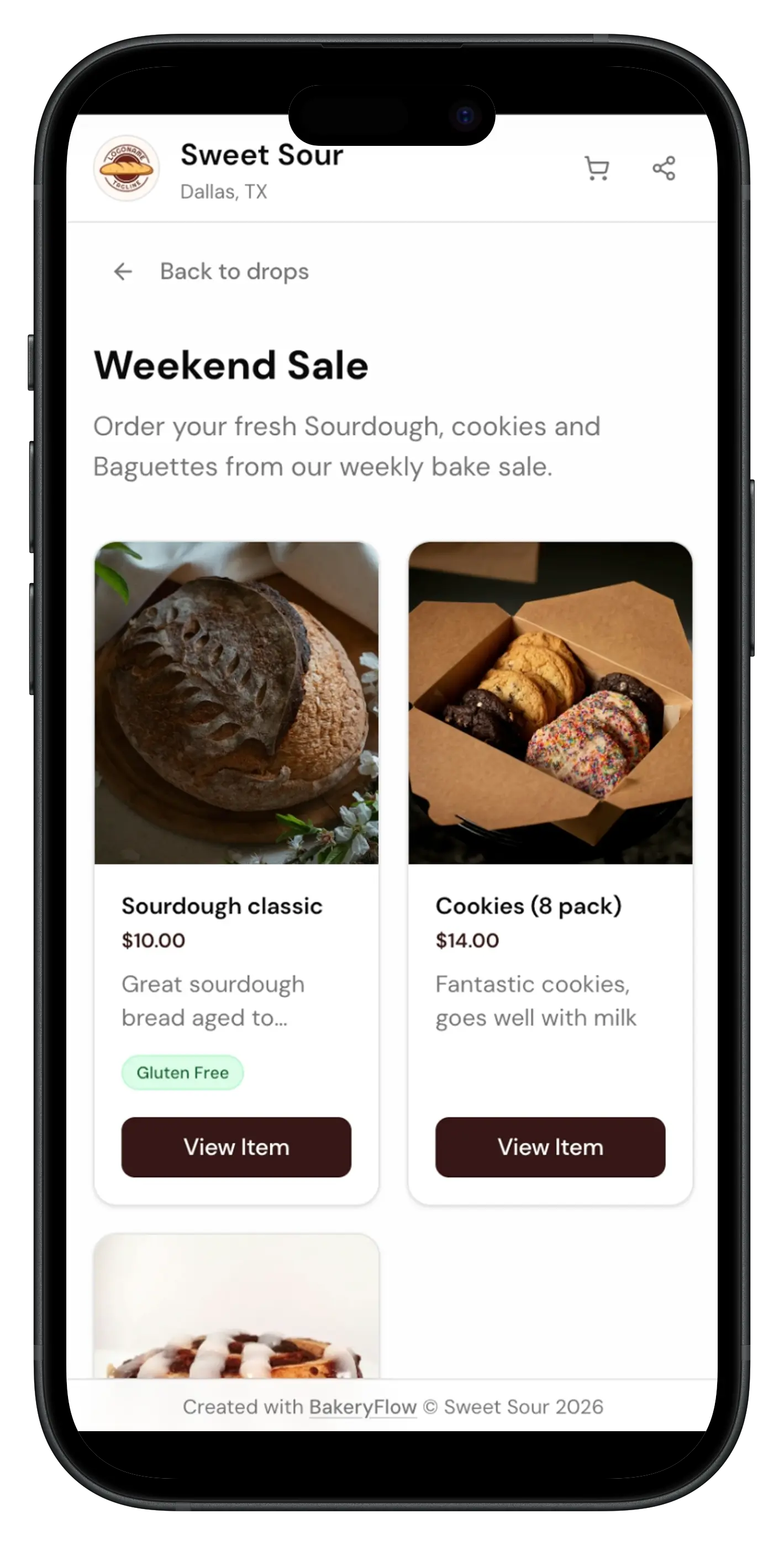
Starting a home bakery?
BakeryFlow is a phone app for home bakers. Share one storefront link, take pre-orders, then bake exactly what sold.
1-month free trial, then $6.99/month or $59.99/year.
Labeling Requirements
- All information in French. You can add other languages, but they can't be more prominent than the French
- Generic or descriptive words in a trademark (like ingredients or flavour) must also appear in French
- Common name of the product
- Ingredient list in descending order by weight
- Priority allergens, gluten sources and added sulphites, in the ingredient list or a 'Contains:' ('Contient :') statement
- Net quantity in metric units
- Your name and address
- Best-before date if the food keeps 90 days or less
- Nutrition Facts table, unless exempt (food sold only by the person who made it at a farmers' market, fair or craft show is exempt)
Common name at least 1.6 mm high (0.8 mm on very small packages)
These are Quebec's French-language rules plus the federal rules for prepackaged food. Ask MAPAQ which apply to what you sell.
Production & Kitchen Requirements
MAPAQ applies the same hygiene and sanitation standards to home kitchens as to other food establishments, plus some home-kitchen conditions.
- Handle no more than 100 kg of food a month
- Follow food establishment hygiene and sanitation standards
- Keep the cold chain for any food that needs refrigeration
- Have someone with the manager (gestionnaire) attestation in charge of hygiene
- Display your permit where customers can see it
- Report changes to MAPAQ's permit service within 15 days
Where & How You Can Sell
Allowed Sales Channels
Customers buy directly from you and pick up from your home.
⚠️ Needs a MAPAQ permit and municipal approval
Sell at public markets, fairs and temporary stands.
⚠️ Needs a restaurant or retail permit, or a special-event permit for events up to 30 consecutive days
Take orders through a website, Etsy or social media.
⚠️ A permit is still required for online sales. Shipping to other provinces can bring in federal CFIA rules
Prohibited Sales Channels
Home kitchen permit holders must sell directly to consumers, not through grocery stores.
Sales to other businesses for resale aren't allowed from a home kitchen.
Activities That Don't Need a Permit
- Reselling prepackaged foods that don't need refrigeration (like granola bars)
- Washing, packaging or trimming fresh fruits and vegetables
- Packaging shell eggs
- Making food at home to sell isn't on MAPAQ's no-permit list
Violations & Enforcement
MAPAQ enforces food permits and hygiene rules. The OQLF enforces the Charter of the French Language, including French on product labels.
Penalty: Minimum fine of $5,000
Penalty: The OQLF can act on complaints under the Charter of the French Language.
Penalty: Expect an investigation and possible civil liability.
Frequently Asked Questions
No. Quebec has no cottage food exemption. Making food to sell from your home kitchen needs a MAPAQ permit, usually the restaurant (restauration) permit, along with a 100 kg-a-month limit and direct-to-consumer sales.
Yes. Under the Charter of the French Language, all information on a product, its packaging and documents that come with it must be in French. You can add English or another language, but it can't be more prominent than the French. Since June 1, 2025, generic or descriptive words in a trademark, like ingredients or flavour, must also appear in French.
MAPAQ limits home kitchens to 100 kg of food a month. There's no dollar cap.
Yes, with a permit. You need a restaurant or retail permit, depending on what you do, or a special-event permit for events that last up to 30 consecutive days.
Yes, but you still need a MAPAQ permit for online sales, and you must sell directly to consumers. If you ship to other provinces, check CFIA's licensing rules first.
MAPAQ treats preparing meals at home for sale as restaurant activity, so catering needs a permit. Ask MAPAQ's permit service which permit fits, since there's a separate category for food services provided for payment.
MAPAQ's home-kitchen conditions don't prohibit helpers, but whoever oversees hygiene needs the manager (gestionnaire) attestation. If you hire employees, you'll take on employer obligations with Revenu Québec and the CRA.
Quebec has the GST and the Quebec sales tax (QST). For businesses located in Quebec, Revenu Québec administers both. You must register once your taxable sales pass $30,000 in a single calendar quarter or over four consecutive calendar quarters; below that you're a small supplier and registration is optional. Many basic groceries are zero-rated, but some bakery items are taxable, for example sweet baked goods sold as single servings in quantities of fewer than six. Revenu Québec can confirm which of your products are taxable.
For the food side, you need a MAPAQ food permit. Your municipality must also allow a food business at your address and may require its own permit, so check locally. Registering a business name is optional if you trade under your own name.
MAPAQ's rules don't rule it out. Check your lease, since some landlords prohibit home businesses, and confirm with your municipality.
Health Canada's priority allergens are peanuts, tree nuts, sesame, milk, eggs, fish, crustaceans and molluscs, soy, wheat and triticale, and mustard. Gluten sources and added sulphites (10 ppm or more) must also be declared. On prepackaged food, declare them in the ingredient list or a 'Contains:' ('Contient :') statement, in French. Ask MAPAQ which labels home-made food sold locally needs.
Getting Started Checklist
Follow these steps to launch your Quebec home food business:
- Check with your municipality that a food business is allowed at your address
- Complete MAPAQ's food establishment manager (gestionnaire) training
- Apply for your MAPAQ permit and wait for it before you start (processing takes 2 to 6 weeks)
- Design French labels that also meet federal labelling rules
- Set your prices (factor in ingredients, time and packaging)
- Register for GST and QST with Revenu Québec if you pass $30,000 in sales
- Consider liability insurance
- Set up simple bookkeeping to track income and expenses
- Track how much food you handle so you stay under 100 kg a month
Growing Beyond a Home Kitchen
If you outgrow 100 kg a month or want to sell to stores, consider these options:
- Rent time in a commercial or shared-use kitchen
- Talk to MAPAQ about the permit you'd need outside your home
- Check whether you need a CFIA Safe Food for Canadians licence before selling into other provinces
- Partner with a co-packer for larger production runs
Official Resources
Starting a home bakery?
BakeryFlow is a phone app for home bakers. Share one storefront link, take pre-orders, then bake exactly what sold.
1-month free trial, then $6.99/month or $59.99/year.