Start your home food business in Saskatchewan
Saskatchewan's Food Safety Regulations let home food processors make low-risk foods at home and sell them to the public, to stores and to restaurants. You need food safety training and proper labels.
Last reviewed October 15, 2026 against 9 official sources
Know the rules? Run the bake day in BakeryFlow.
Plan the menu, take pre-orders, and bake from one list. That is what this home bakery app is built for. When you turn on tax, use the sales tax guide to find your official rate source.
Saskatchewan Home Food Processing Overview
Saskatchewan's Food Safety Regulations let home food processors make low-risk foods at home for sale. The rules started in 2016 and were updated on August 7, 2026 to allow sales to restaurants.
No annual sales cap
No food facility licence needed for home food processors
No routine inspections. A public health inspector may visit after a complaint or illness.
Someone with an approved food safety course must be working whenever food is made
Sell to consumers, to stores that don't prepare food, and to restaurants
What You Can (and Can't) Sell
- Baked goods without cream, custard or meat fillings (cakes, squares, cookies, fruit pies, pastries)
- Fudge, candy, cotton candy, toffee and chocolate
- Honey, jam, jelly, applesauce and syrup
- Vinegar-based pickled vegetables and relish (pH 4.6 or lower)
- Popcorn, popcorn balls and candied apples
- Cereals, granola and trail mixes
- Dried fruits and vegetables
- Dried grains, seeds, herbs and spices
- Dry baking mixes and egg-free dry noodles
- Potentially hazardous foods that need temperature control
- Baked goods with cream, custard or meat fillings
- Meat products
- Dairy products
- Any food not shown to be low risk (water activity 0.85 or less, or pH 4.6 or less)
Sales Limits & Locations
No annual sales cap
The Food Safety Regulations don't set a sales cap for home food processors.
- Directly to consumers
- Retail or wholesale businesses that don't prepare or process food
- Public eating establishments (restaurants and cafés)
- Only low-risk foods
- No sales to hospitals, health centres, licensed child care centres, or special-care and personal care homes with more than 20 residents
- No sales to food processing facilities, milk plants or slaughter plants
- Every product must carry the required label
Comparing provinces? See sales limits in every province we cover.
Requirements & Regulations
No food facility licence needed. Home food processors are left out of the licensing rules for food facilities. Talk to your local public health inspector before making foods that aren't on the province's low-risk list.
No routine inspections. A public health inspector may visit if there's a complaint, a possible foodborne illness or an outbreak.
Required. A person who has passed a food safety course approved by the health authority must be working in your home whenever low-risk food is made for sale.
Not required by the province. Consider liability insurance.
Check your municipality's rules for home-based businesses, including customer pickup at your home.
Starting a home bakery?
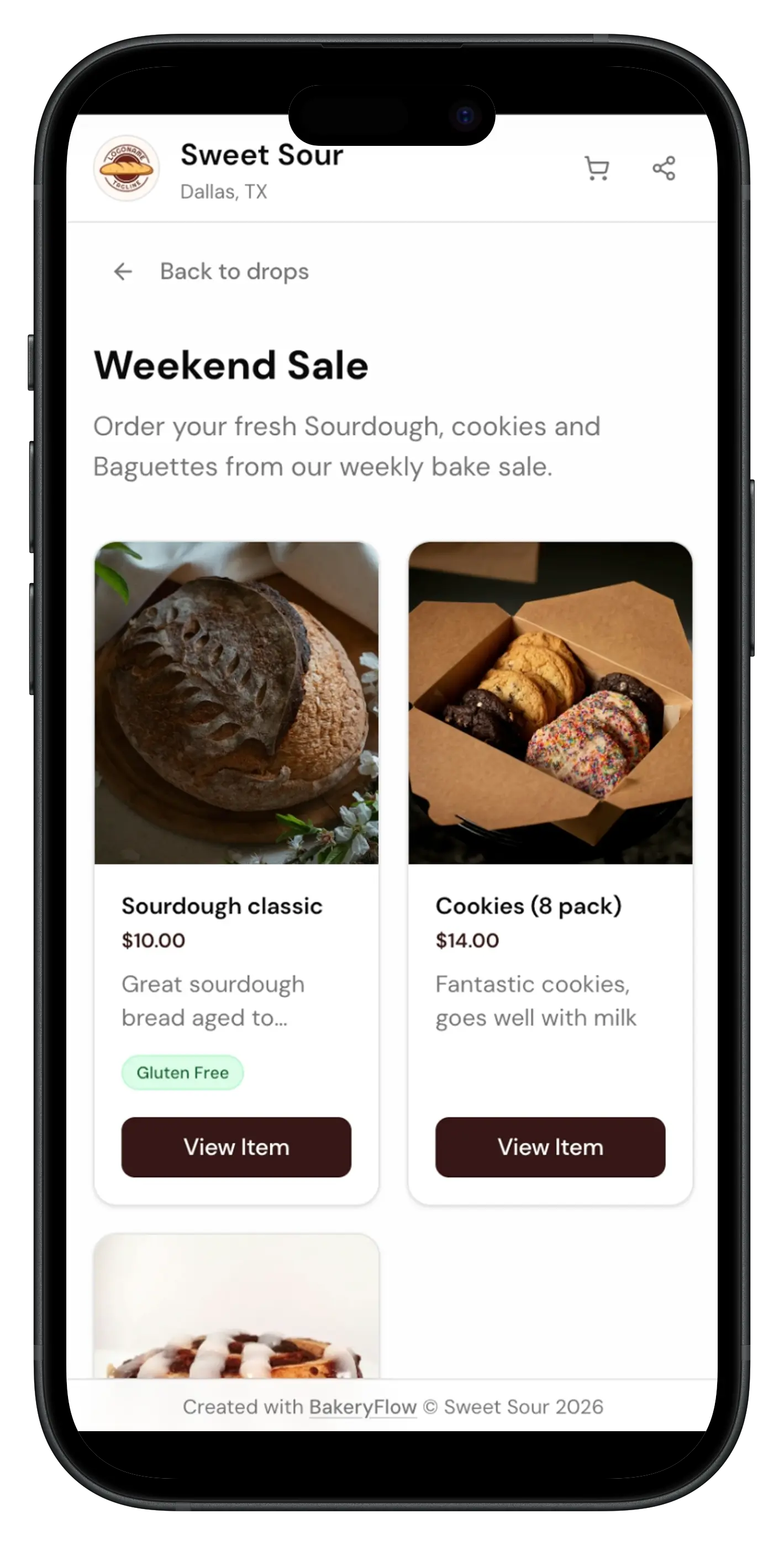
BakeryFlow is a phone app for home bakers. Share one storefront link, take pre-orders, then bake exactly what sold.
1-month free trial, then $6.99/month or $59.99/year.
Labeling Requirements
- Statement: 'Made in a Home Kitchen That is Not Inspected by a Government Agency'
- Name of the food
- Your name and any business name
- Your address and phone number
- Date the food was made
At least 12-point font
Every product needs the label. Low-risk food can't be sold or resold without it.
Production & Kitchen Requirements
The Food Safety Regulations and the Home Food Processing Fact Sheet set these rules.
- Make only low-risk foods. For anything not on the province's list, ask your public health inspector first.
- Your inspector may ask you to send samples to a lab, at your cost, to show a food is low risk
- Use water that's safe to drink. Test private wells at least once a year.
- Keep infants, small children, sick family members and pets out of the kitchen while you cook
- Wash, rinse and sanitize counters, cutting boards and utensils before each use
- Keep food packaged or covered while it's stored, displayed or moved
- Don't prepare food if you're sick
Where & How You Can Sell
Allowed Sales Channels
Sell straight to the people who will eat your food, for example from home, at farmers' markets or at events.
⚠️ Markets and events may have their own vendor rules. Check municipal rules for sales from home.
Sell to stores or wholesalers that don't prepare or process food.
⚠️ Your label must stay on the product
Since August 7, 2026, you can sell directly to public eating establishments.
⚠️ The restaurant needs a written exemption from the local authority and must tell customers the food was made in an uninspected home kitchen
The regulations allow direct sales to consumers but don't address online orders separately.
⚠️ Ask your public health inspector about delivery. Shipping to another province can bring in federal CFIA rules.
Prohibited Sales Channels
No sales to hospitals, health centres, licensed child care centres, or special-care and personal care homes with more than 20 residents
No sales to food processing facilities (such as bakeries), milk plants or slaughter plants
Good to Know
- Home food processors don't need a food facility licence
- Foods on the province's low-risk list don't need lab testing unless an inspector asks
Violations & Enforcement
Public health inspectors with the Saskatchewan Health Authority enforce the Food Safety Regulations. What happens depends on the case, so ask your inspector if you're unsure about a rule.
Penalty: You'll need to stop making that food, change the recipe, or move it to an approved facility
Penalty: Can lead to enforcement action until labels are fixed
Penalty: Not complying is a breach of the regulations
Penalty: Investigation by a public health inspector, and possible civil liability
Frequently Asked Questions
Home food processors don't need a food facility licence from the province, but you do need food safety training and proper labels. Your municipality may still require a business licence or home-based business permit, so check locally. Registering a business name is optional for the food rules. If you trade under a name other than your own, check Saskatchewan's business name rules.
The regulations allow direct sales to consumers but don't mention online sales or shipping. Ask your local public health inspector before you deliver or ship. If you ship to another province, check federal rules with the Canadian Food Inspection Agency.
Home food processors can only make and sell low-risk foods. Ask your public health inspector before you cater an event.
The regulations don't limit helpers. Someone with an approved food safety course must be working in your home whenever food is made for sale.
There are two taxes. The federal GST: register with the Canada Revenue Agency (CRA) once your taxable sales pass $30,000 in a single calendar quarter or over four consecutive calendar quarters. Many basic groceries are zero-rated for GST, but some bakery items, such as single servings, can be taxable. Saskatchewan PST: sweetened baked goods sold as single servings (under 230 g) in quantities of fewer than six, candy and prepared food are taxable. The $30,000 small supplier rule doesn't apply to PST, so if you sell taxable food you need a PST vendor's licence. Check with the Saskatchewan Ministry of Finance.
The rules cover low-risk food made at home, which can be a rental. Check your lease, as some landlords don't allow home businesses.
Health Canada's priority allergens are peanuts, tree nuts, sesame, milk, eggs, fish, crustaceans and molluscs, soy, wheat and triticale, and mustard. Gluten sources and added sulphites (10 ppm or more) must also be declared. On prepackaged food they go in the ingredient list or a 'Contains:' statement. Saskatchewan's home food label rules don't list allergens, so ask your public health inspector which labels your food needs.
Getting Started Checklist
Follow these steps to launch your Saskatchewan home food business:
- Choose your product(s) from the province's low-risk foods list
- Take an approved food safety course
- Test your water if you use a private well
- Design and print labels with all required information, in at least 12-point font
- Set your prices (factor in ingredients, time, and packaging)
- Get a PST vendor's licence if you sell taxable food, and register for GST if you pass $30,000 in sales
- Check municipal business licence and zoning rules
- Set up a simple bookkeeping system to track income and expenses
- Find your first sales venue (farmers market, local store, etc.)
Scaling Beyond Home Food Processing
If your business outgrows the home food processing rules, consider these options:
- Rent time in a licensed commercial kitchen
- Talk to your public health inspector about a food facility licence
- Build or lease your own commercial kitchen space
- Partner with a co-packer for larger production runs
Official Resources
Starting a home bakery?
BakeryFlow is a phone app for home bakers. Share one storefront link, take pre-orders, then bake exactly what sold.
1-month free trial, then $6.99/month or $59.99/year.