Start your cottage food business in Arizona
Arizona home cooks can sell a wide range of homemade foods with no sales cap. You need food handler training and a free registration with ADHS first.
Last reviewed October 15, 2026 against 5 official sources
Know the rules? Run the bake day in BakeryFlow.
Plan the menu, take pre-orders, and bake from one list. That is what this home bakery app is built for. When you turn on tax, use the sales tax guide to find your official rate source.
Arizona Cottage Food Law Overview
Arizona's Cottage Food Program (A.R.S. 36-931 to 36-933 and rule R9-8-101.02, updated February 2025) lets registered home cooks sell most homemade foods in Arizona, including many foods that need refrigeration.
No annual sales cap
Free registration with ADHS, renewed every three years
Accredited food handler training required
Home kitchens are not inspected
Sales and delivery inside Arizona only
What You Can (and Can't) Sell
- Baked goods (cookies, cakes, cupcakes, breads, pastries, pies)
- Frostings and icings, including buttercream and cream cheese frosting
- Cheesecakes
- Candy, fudge, toffee and chocolate-dipped treats
- Jams, jellies, fruit butters and curds
- Salsas, pickles and fermented foods
- Tamales, burritos and other prepared meals
- Jerky and other foods made with meat from an inspected (approved) source
- Nut butters, granola, popcorn and snack mixes
- Roasted coffee, tea blends and drink mixes
- Dried and freeze-dried fruits, vegetables and candy
- Fish and shellfish
- Raw (unpasteurized) milk
- Alcoholic beverages
- Marijuana or CBD products
- Ingredients the FDA doesn't recognize as safe (GRAS), such as kava
- Meat or poultry that isn't from an inspected source or covered by a federal exemption
- Dietary supplements
- Pet treats and animal feed (regulated by the Arizona Department of Agriculture)
Sales Limits & Locations
No annual sales cap
Arizona law sets no dollar limit on cottage food sales. Sales of poultry products are limited to what federal law allows.
- From your home
- Farmers markets, fairs and events
- Online, by phone or by email, for delivery in Arizona
- Retail stores and other third-party vendors (shelf-stable foods only)
- Third-party delivery apps (shelf-stable foods only)
- Only sell and deliver inside Arizona
- Foods that need refrigeration, or that contain meat or poultry, must be sold by you and delivered in person, never through a store, vendor or delivery app
- Refrigerated foods must stay at a safe temperature in transit, go to one destination, and travel no more than two hours
- Products can't be sold to a restaurant or store to use as an ingredient
- Don't store products or equipment outside your home
Comparing states? See sales limits in every state we cover.
Requirements & Regulations
Register with ADHS through the MyHealthDepartment portal before you sell. Registration is free and must be renewed every three years.
Home kitchens are not inspected. ADHS can suspend or revoke a registration after a verified complaint or a rule violation.
Complete an accredited (ANSI) food handler course before you register and keep the certificate active. An active food manager certificate also counts.
Not required by law, but recommended for liability protection.
Check with your county planning and zoning office about rules for home-based businesses.
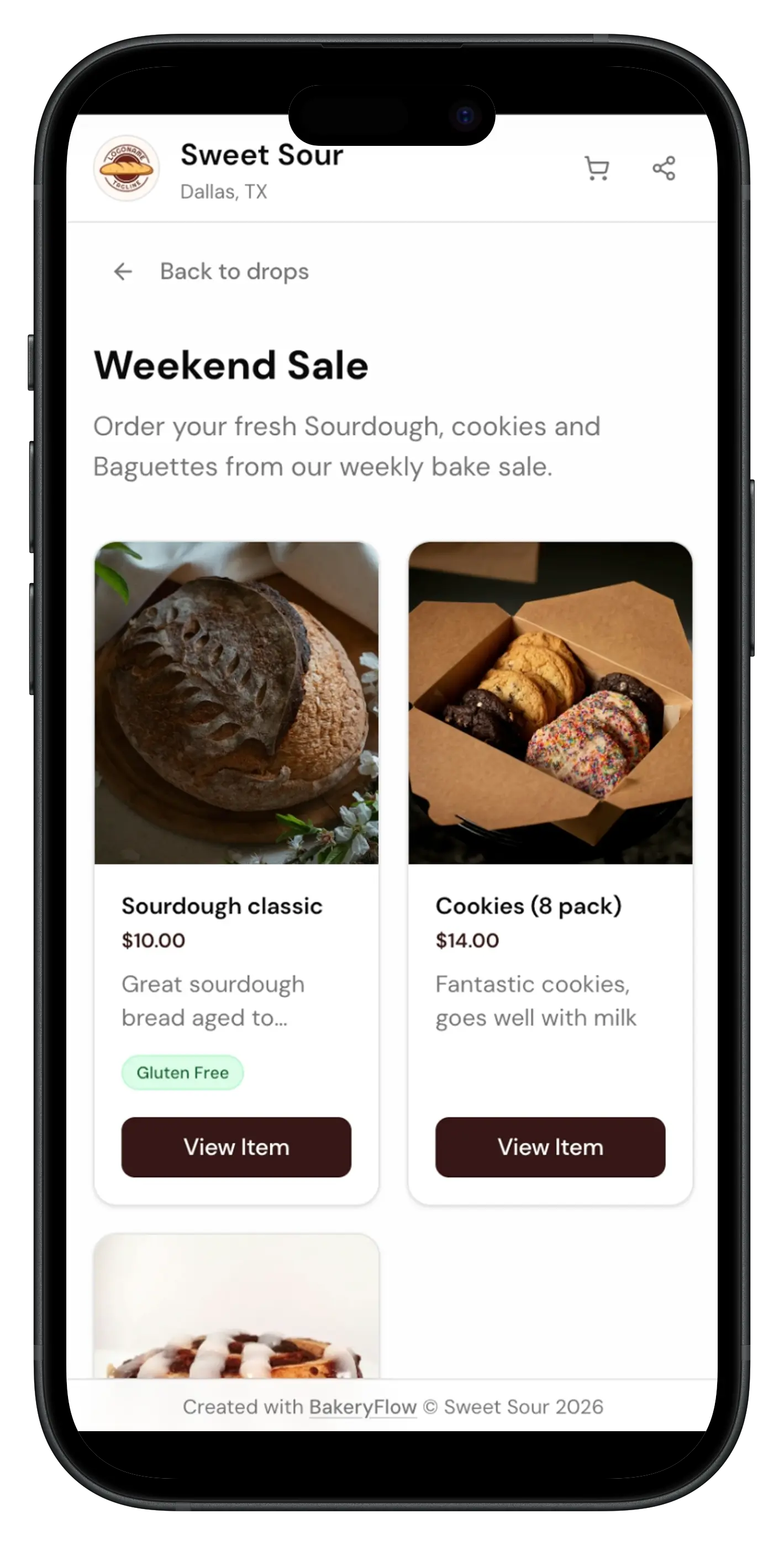
Starting a home bakery?
BakeryFlow is a phone app for home bakers. Share one storefront link, take pre-orders, then bake exactly what sold.
1-month free trial, then $6.99/month or $59.99/year.
Labeling Requirements
- Production date
- Your name and ADHS registration number
- Complete list of ingredients, including those in each component
- Statement: 'This product was produced in a home kitchen that may come in contact with common food allergens and pet allergens and is not subject to public health inspection.'
- The ADHS website: azdhs.gov/CottageFood
- If it applies, a statement that the food was made in a facility for individuals with developmental disabilities
Clear, legible printed or handwritten text
Attach the label to the package at home. Online listings must also show all of this information.
Production & Kitchen Requirements
Arizona's statute and rule set these requirements for registered cottage food preparers.
- Prepare food in the home kitchen at the address you registered
- Package and label food at home, and sell it in that same packaging
- Use ingredients from approved sources, such as a grocery store
- Follow the safe food handling practices from your food handler training
- Directly supervise anyone who helps you and isn't registered
- Don't store products or equipment outside your home
- Don't use your home kitchen as a commissary for a food truck
- Dispose of food and kitchen waste in a safe, sanitary way
- Report changes to your registration details to ADHS within 30 days
Where & How You Can Sell
Allowed Sales Channels
Customers can order online, by phone or in person and pick up from your home.
⚠️ Check local zoning rules for home-based businesses.
Sell at farmers markets, fairs, festivals and craft shows.
⚠️ Display your certificate of registration when you sell away from home. Open sampling, assembling food or pouring drinks on site isn't covered.
Sell online, including on your own website or social media, to customers in Arizona.
⚠️ Listings must show all label information. Shelf-stable foods can go by carrier or delivery app; refrigerated foods and foods with meat or poultry must be delivered by you in person.
Shelf-stable foods can be sold through stores, kiosks and other third-party vendors.
⚠️ The store must keep your products in a separate section or display and post a sign saying they are homemade and exempt from state licensing and inspection.
Prohibited Sales Channels
Cottage foods can only be offered for sale and delivery in Arizona.
Foods that need refrigeration, or that contain meat or poultry, can't be sold by a store or vendor or delivered by a delivery app.
Cottage foods can't be sold to be used as an ingredient in food sold at a permitted retail food establishment.
Additional Exemptions
- A home kitchen that makes only shelf-stable food for a religious or charitable organization's bake sale doesn't need a registration, if a clearly visible placard tells buyers the food comes from a kitchen that isn't regulated or inspected.
- Free samples are allowed, but each sample must be packaged and labeled like a product for sale.
Violations & Enforcement
ADHS oversees registered cottage food preparers and contacts you in writing about suspected problems or complaints.
Penalty: ADHS may suspend or revoke your registration. Civil or criminal penalties may also apply.
Penalty: You lose the cottage food exemption and may be treated as an illegal food establishment, subject to fines.
Penalty: ADHS may suspend or revoke your registration.
Penalty: ADHS may suspend or revoke your registration.
Frequently Asked Questions
For the food side, you need a free Cottage Food Program registration with ADHS and food handler training, but no other state food license. Your city or county may still require a business license or home-occupation permit, so check locally. Registering a business name is optional.
Yes, but only to customers in Arizona. Each listing must show all of your label information. Shelf-stable foods can be shipped or delivered within Arizona. Foods that need refrigeration, or that contain meat or poultry, must be delivered by you or your employee in person.
Not under the cottage food program. Food must be packaged and labeled in your home kitchen and sold in that packaging. Serving, assembling food or pouring drinks at an event needs a permitted food establishment.
Yes. Anyone helping you who isn't registered must work under your direct supervision, and you're responsible for their work. Refrigerated foods can be delivered by you or your employee. Hiring staff may bring other tax and employment rules.
Some food is taxed and some is exempt in Arizona. ADHS notes that the state doesn't tax food for home consumption, but some cities do. Check with the Arizona Department of Revenue and get a transaction privilege tax (TPT) license if your products are taxable.
Yes, if it's your home kitchen. Check your lease, since some landlords don't allow home-based businesses.
Arizona's required label statement already warns that your kitchen may contact common food and pet allergens. List all ingredients in descending order by weight. If a product contains any of the 9 major food allergens (milk, eggs, fish, crustacean shellfish, tree nuts, peanuts, wheat, soybeans and sesame), name them on the label, for example in a 'Contains:' statement.
Getting Started Checklist
Follow these steps to launch your Arizona cottage food business:
- Check that your products are allowed under the Cottage Food Program
- Complete an accredited (ANSI) food handler course
- Register for free with ADHS through MyHealthDepartment
- Design labels with all required information
- Set your prices (factor in ingredients, time, and packaging)
- Check whether your products are taxable and get a TPT license from the Arizona Department of Revenue if they are
- Consider getting liability insurance
- Set up a simple bookkeeping system to track income and expenses
- Find your first sales venue (farmers market, online, a local store)
Scaling Beyond Cottage Food
If your business outgrows the cottage food law, consider these options:
- Rent time in a commercial kitchen or shared-use facility
- Apply for a retail food establishment license
- Build or lease your own commercial kitchen space
- Partner with a co-packer for larger production runs
- Explore wholesale opportunities with proper licensing
Official Resources
Starting a home bakery?
BakeryFlow is a phone app for home bakers. Share one storefront link, take pre-orders, then bake exactly what sold.
1-month free trial, then $6.99/month or $59.99/year.