Start your cottage food business in Florida
Florida home bakers can sell up to $250,000 a year with no state permit, in person, online or by mail order.
Last reviewed October 15, 2026 against 4 official sources
Know the rules? Run the bake day in BakeryFlow.
Plan the menu, take pre-orders, and bake from one list. That is what this home bakery app is built for. When you turn on tax, use the sales tax guide to find your official rate source.
Florida Cottage Food Law Overview
Florida lets home bakers sell low-risk foods to consumers without a food permit (Fla. Stat. 500.80). You can sell in person, online or by mail order, and ship orders, up to $250,000 a year.
$250,000 annual sales cap
No state permit or registration
Inspected only after a complaint
No training requirement in the law
Sell in person, online or by mail order (no wholesale)
What You Can (and Can't) Sell
- Baked goods (cookies, cakes, breads, pastries)
- Candy and confections
- Fruit pies and cobblers
- Jams and jellies
- Dried fruits and vegetables
- Popcorn and snack mixes
- Granola and cereals
- Roasted coffee beans
- Dried herbs and spices
- Foods requiring refrigeration
- Cream-filled pastries
- Meat products and jerky
- Canned goods (non-acidified)
- Pickled products
- Dairy products
- Nut butters
- Pet treats
Sales Limits & Locations
$250,000
Florida allows up to $250,000 in gross cottage food sales a year without a food permit.
- Direct sales from home
- Farmers markets and events
- Online and mail-order sales
- Delivery in person, to an event venue, or by USPS or a commercial carrier
- No wholesale sales
- No sales to stores or restaurants for resale
- You can only sell products you store at your home
Comparing states? See sales limits in every state we cover.
Requirements & Regulations
No state food permit or registration needed.
No routine inspection. The Florida Department of Agriculture (FDACS) can inspect only after a complaint.
The law doesn't require a training course.
Not required by law, but recommended for liability protection.
Cities and counties can't ban or regulate cottage food operations, but general state rules for home-based businesses still apply.
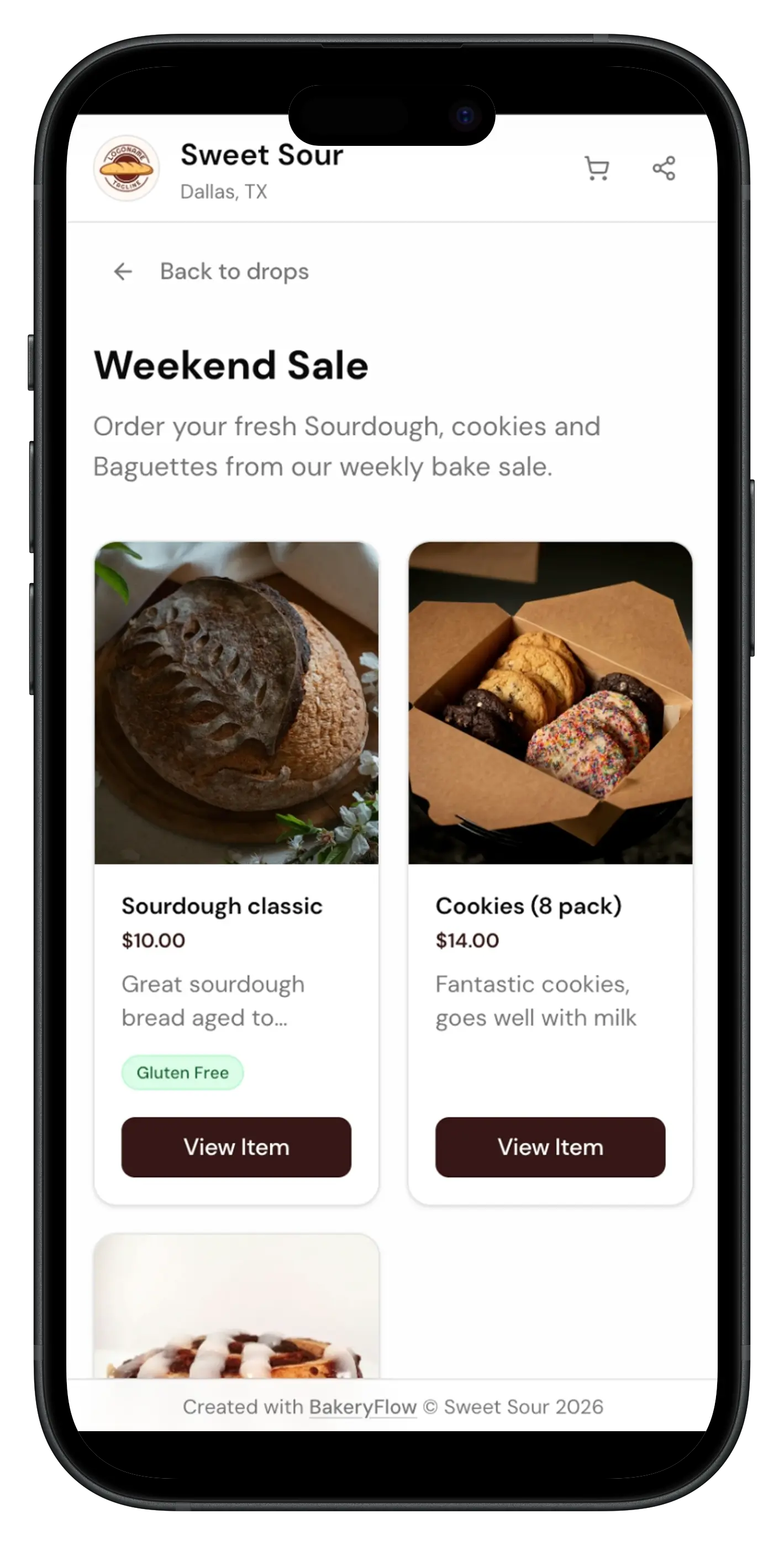
Starting a home bakery?
BakeryFlow is a phone app for home bakers. Share one storefront link, take pre-orders, then bake exactly what sold.
1-month free trial, then $6.99/month or $59.99/year.
Labeling Requirements
- Statement: 'Made in a cottage food operation that is not subject to Florida's food safety regulations'
- Product name
- Ingredient list in descending order by weight
- Net weight or volume
- Business name and address
- Allergen information, following federal labeling rules
- Nutrition information, only if you make a nutrition claim
The cottage food statement must be in at least 10-point type, in a color that contrasts with the background
Only prepackaged, labeled products can be sold
Production & Kitchen Requirements
Florida cottage food operations must follow specific production rules to ensure food safety.
- All products must be made in your primary residence kitchen
- Kitchen must be maintained in a clean and sanitary condition
- Pets should be kept out of the kitchen during food production
- Use potable (drinking quality) water for all food preparation
- Store ingredients properly to prevent contamination
- Maintain proper refrigeration temperatures (below 41°F)
- Wash hands thoroughly before and during food preparation
- Use clean utensils, equipment, and food-contact surfaces
- Keep accurate records of production dates and sales
- Do not prepare cottage foods at the same time as potentially hazardous foods
Where & How You Can Sell
Allowed Sales Channels
Sell from home, at farmers markets, and at events.
Take orders and payment on your website or by mail order.
Deliver in person or to an event venue, or ship by USPS or a commercial carrier.
Prohibited Sales Channels
Cottage food products can't be sold wholesale, including to stores or restaurants for resale.
Additional Exemptions
- Free tasting samples are allowed if they are prepackaged
- Bake sales and fundraisers by nonprofit organizations may follow different rules. Check with FDACS
Violations & Enforcement
FDACS can investigate complaints and inspect your home kitchen after one. Refusing an inspection can lead to discipline. Penalties depend on the case, so ask FDACS if you're unsure about a rule.
Penalty: Can lead to enforcement action by FDACS
Penalty: Can lead to enforcement action until labels are fixed
Penalty: You lose the cottage food exemption and would need a food permit
Penalty: Investigation by health officials and possible civil liability
Frequently Asked Questions
Florida doesn't require a state food permit or registration for cottage food operations under $250,000 a year. Your city or county may still require a local business tax receipt, so check locally. Registering a business name is optional.
Yes. Florida allows online and mail-order sales, delivered by USPS or a commercial carrier. Selling across state lines may bring federal rules into play, so check before you ship out of state.
Florida's cottage food law covers prepackaged, labeled foods sold to consumers. Catering or serving food at events usually needs a food permit, so check with FDACS before you take a catering job.
The law does not explicitly prohibit helpers, but all production must occur in your home kitchen. If you hire employees, you may trigger additional business regulations and tax requirements.
Some food is taxed and some is exempt in Florida. Check with the Florida Department of Revenue and register for a sales tax permit if your products are taxable. The cottage food law doesn't exempt you from tax rules.
Yes, as long as it's your primary residence. However, check your lease agreement as some landlords prohibit home-based businesses.
List all ingredients in descending order by weight. If a product contains any of the 9 major food allergens (milk, eggs, fish, crustacean shellfish, tree nuts, peanuts, wheat, soybeans and sesame), name them on the label, for example in a 'Contains:' statement.
Getting Started Checklist
Follow these steps to launch your Florida cottage food business:
- Choose your product(s) from the allowed foods list
- Perfect your recipes and test them with friends/family
- Design and print labels with all required information
- Set your prices (factor in ingredients, time, and packaging)
- Check with the Florida Department of Revenue whether your products are taxable, and register if they are
- Consider getting liability insurance
- Set up a simple bookkeeping system to track income and expenses
- Find your first sales venue (farmers market, online, etc.)
- Start small and scale as you gain experience
Scaling Beyond Cottage Food
If your business outgrows the cottage food law, consider these options:
- Rent time in a commercial kitchen or shared-use facility
- Apply for a retail food establishment license
- Build or lease your own commercial kitchen space
- Partner with a co-packer for larger production runs
- Explore wholesale opportunities with proper licensing
Official Resources
Starting a home bakery?
BakeryFlow is a phone app for home bakers. Share one storefront link, take pre-orders, then bake exactly what sold.
1-month free trial, then $6.99/month or $59.99/year.
Compare Cottage Food Laws in Other States
Taking pre-orders in Florida? See the home bakery app for Florida bakers.