Start your cottage food business in Georgia
Georgia home bakers can sell low-risk foods with no state license and no sales cap. You need a food safety course first.
Last reviewed October 15, 2026 against 5 official sources
Know the rules? Run the bake day in BakeryFlow.
Plan the menu, take pre-orders, and bake from one list. That is what this home bakery app is built for. When you turn on tax, use the sales tax guide to find your official rate source.
Georgia Cottage Food Law Overview
Since July 1, 2025 (HB 398), Georgia home bakers don't need a state license to sell low-risk cottage foods. You do need a food safety course, and there is no cap on sales.
No annual sales cap
No state license or fee since July 1, 2025
ANSI-accredited food safety course required (food handler training counts)
No state inspection before you start
Sell to consumers in Georgia, and to stores and restaurants unless your city or county opts out
What You Can (and Can't) Sell
- Loaf breads, rolls and biscuits
- Cakes
- Pastries and cookies
- Candies and confections
- Fruit pies
- Jams, jellies and preserves
- Dried fruits
- Dry herbs, seasonings and mixtures
- Cereals, trail mixes and granola
- Coated or uncoated nuts
- Vinegar and flavored vinegars
- Popcorn, popcorn balls and cotton candy
- Foods that are potentially hazardous (need refrigeration or other time and temperature control)
- Cream-filled pastries
- Meat products and jerky
- Canned goods (non-acidified)
- Pickled products
- Dairy products
- Nut butters
- Pet treats (these need a feed license from the Department of Agriculture)
Sales Limits & Locations
No sales cap
The Georgia Department of Agriculture sets no limit on gross sales or on the number of units you make.
- Direct sales from home
- Farmers markets and community events
- Online orders from customers in Georgia
- Delivery, including by commercial delivery companies
- Grocery stores, convenience stores and restaurants, unless your city or county has opted out
- Online sales only to end consumers in Georgia
- Selling across state lines may bring FDA oversight
- A city or county may ban sales through stores and restaurants
- Some farmers markets ask vendors for their own license
Comparing states? See sales limits in every state we cover.
Requirements & Regulations
No state license or fee since July 1, 2025. Local business license and zoning rules still apply. You can request an optional state ID number to print on labels instead of your home address.
No state inspection before you start. The Department of Agriculture can still look into complaints.
You must complete an ANSI-accredited food safety course. A food handler course counts.
Not required by law, but recommended for liability protection.
Check local zoning ordinances for home-based business restrictions.
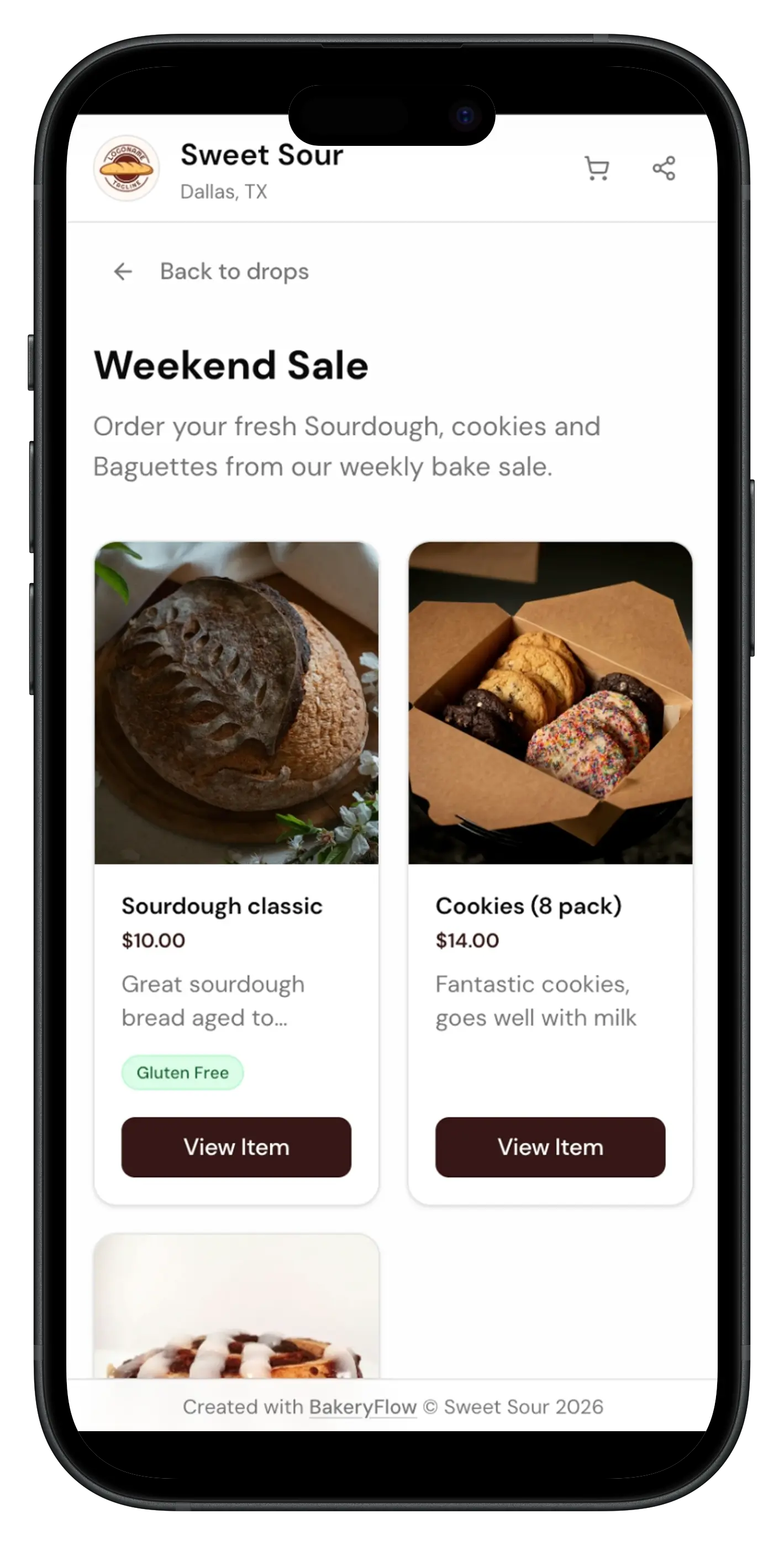
Starting a home bakery?
BakeryFlow is a phone app for home bakers. Share one storefront link, take pre-orders, then bake exactly what sold.
1-month free trial, then $6.99/month or $59.99/year.
Labeling Requirements
- Statement: 'MADE IN A COTTAGE FOOD OPERATION THAT IS NOT SUBJECT TO STATE FOOD SAFETY INSPECTIONS'
- Product name
- Ingredient list in descending order by weight
- Net weight or volume
- Your name and the physical address of your home kitchen (no PO box), or a GDA identification number
- Allergen information (if applicable)
The cottage food statement must be in capital letters, at least 10-point type, in a contrasting color
All information must be on the label
Production & Kitchen Requirements
Georgia cottage food operations must follow specific production rules to ensure food safety.
- All products must be made in your primary residence kitchen
- Kitchen must be maintained in a clean and sanitary condition
- Pets should be kept out of the kitchen during food production
- Use potable (drinking quality) water for all food preparation
- Store ingredients properly to prevent contamination
- Maintain proper refrigeration temperatures (below 41°F)
- Wash hands thoroughly before and during food preparation
- Use clean utensils, equipment, and food-contact surfaces
- Keep accurate records of production dates and sales
- Do not prepare cottage foods at the same time as potentially hazardous foods
Where & How You Can Sell
Allowed Sales Channels
Sell from home, at farmers markets, and at fairs, festivals and other events.
⚠️ Some farmers markets ask vendors for their own license
Take orders online or by phone from customers in Georgia.
⚠️ End consumers in Georgia only
Deliver orders yourself or use a commercial delivery company. Local governments can't ban delivery companies from carrying cottage foods.
Since July 1, 2025, you can sell to grocery stores, convenience stores and restaurants.
⚠️ Your city or county can opt out of this
Prohibited Sales Channels
Selling across state lines may bring FDA oversight.
GDA's cottage food FAQ says cottage foods can't be sold on consignment. Ask GDA how this applies now that store sales are allowed.
Additional Exemptions
- You can hand out samples if labeled packages of the same product are on display
- Food sold at events sponsored by nonprofit organizations may be exempt from licensing (O.C.G.A. § 26-2-21). Ask GDA before you rely on this.
Violations & Enforcement
The Georgia Department of Agriculture still investigates consumer complaints, foodborne illness reports and public health emergencies. Penalties depend on the case, so ask GDA if you're unsure about a rule.
Penalty: Can lead to an order to stop selling and other enforcement action
Penalty: Can lead to enforcement action until labels are fixed
Penalty: Can lead to an order to stop selling and other enforcement action
Penalty: Investigation by GDA or the health department, and possible civil liability
Frequently Asked Questions
Not from the state. Since July 1, 2025, Georgia doesn't license cottage food operators, so there's no state permit or fee. Your city or county may still require a business license or home occupation permit, so check locally. Registering a separate business name is optional.
You can take orders online, but only from customers in Georgia. Selling across state lines may bring FDA oversight.
No. GDA treats catering as a food service business, which falls under your county health department's rules, not the cottage food law.
GDA's cottage food pages don't cover helpers or employees. Ask GDA before anyone else makes food for your business. All production must happen in your home kitchen.
Some food is taxed and some is exempt in Georgia. Check with the Georgia Department of Revenue and register for a sales tax permit if your products are taxable.
It must be your primary residence. GDA says secondary homes, vacation homes and motor homes don't qualify. Check your lease too, as some landlords don't allow home businesses.
List all ingredients in descending order by weight. If a product contains any of the 9 major food allergens (milk, eggs, fish, crustacean shellfish, tree nuts, peanuts, wheat, soybeans and sesame), name them on the label, for example in a 'Contains:' statement.
Getting Started Checklist
Follow these steps to launch your Georgia cottage food business:
- Choose your product(s) from the allowed foods list
- Check your city or county for business license and zoning rules
- Perfect your recipes and test them with friends/family
- Design and print labels with all required information
- Set your prices (factor in ingredients, time, and packaging)
- Complete an ANSI-accredited food safety course
- Check with the Georgia Department of Revenue whether your products are taxable, and register if they are
- Consider getting liability insurance
- Set up a simple bookkeeping system to track income and expenses
- Find your first sales venue (farmers market, online, etc.)
- Start small and scale as you gain experience
Scaling Beyond Cottage Food
If your business outgrows the cottage food law, consider these options:
- Rent time in a commercial kitchen or shared-use facility
- Apply for a retail food establishment license
- Build or lease your own commercial kitchen space
- Partner with a co-packer for larger production runs
- Explore wholesale opportunities with proper licensing
Official Resources
Starting a home bakery?
BakeryFlow is a phone app for home bakers. Share one storefront link, take pre-orders, then bake exactly what sold.
1-month free trial, then $6.99/month or $59.99/year.
Compare Cottage Food Laws in Other States
Taking pre-orders in Georgia? See the home bakery app for Georgia bakers.