Cottage food sales limits and licenses, state by state
How much can you sell from your home kitchen, and do you need a license first? Here is the answer for every state we cover. Each row comes from our full guide for that state.
Every guide on this page was reviewed on or after October 15, 2026, against official sources.
Sales caps by state
10 of the 15 states we cover set no dollar cap on cottage food sales. Where a state does set one, it runs from $35,000 a year in Washington to $250,000 in Florida.
| State | Annual sales cap |
|---|---|
| Arizona | No dollar cap |
| California | Class A: $88,878 | Class B: $177,756 (2026) |
| Florida | $250,000 |
| Georgia | No dollar cap |
| Illinois | No dollar cap |
| Indiana | No dollar cap |
| Michigan | $50,000 |
| New York | No dollar cap |
| North Carolina | No dollar cap |
| Ohio | No dollar cap |
| Pennsylvania | No dollar cap |
| Tennessee | No dollar cap |
| Texas | $150,000 |
| Virginia | No dollar cap |
| Washington | $35,000 |
Starting a home bakery?
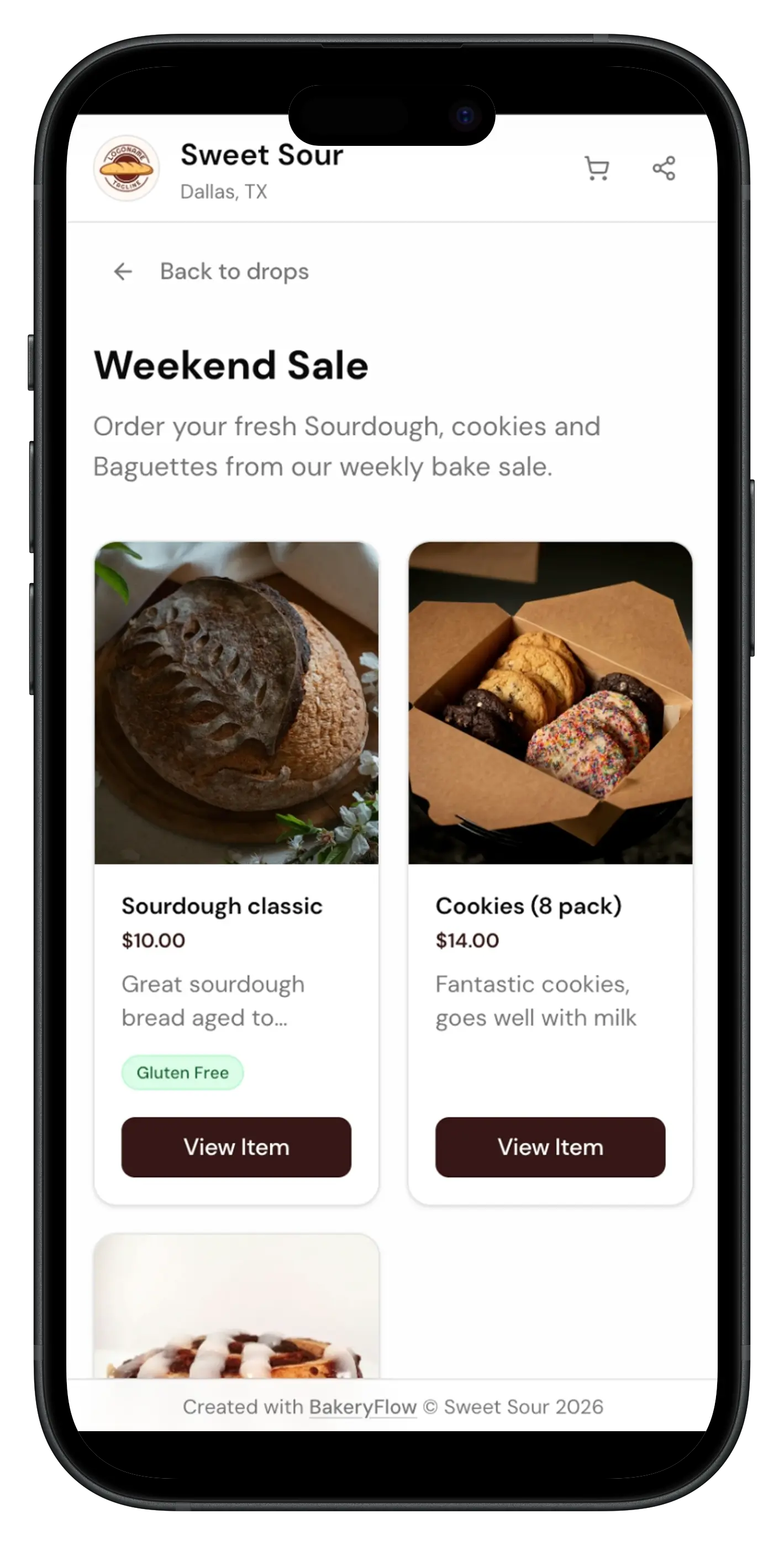
BakeryFlow is a phone app for home bakers. Share one storefront link, take pre-orders, then bake exactly what sold.
1-month free trial, then $6.99/month or $59.99/year.
Caps and licenses by state
Arizona
Sales cap: No dollar cap
Arizona law sets no dollar limit on cottage food sales. Sales of poultry products are limited to what federal law allows.
License or registration: Register with ADHS through the MyHealthDepartment portal before you sell. Registration is free and must be renewed every three years.
Read the Arizona cottage food guideCalifornia
Sales cap: Class A: $88,878 | Class B: $177,756 (2026)
From January 1, 2026, Class A operations can sell up to $88,878 a year and Class B up to $177,756. The California Department of Public Health (CDPH) adjusts both caps each year for inflation.
License or registration: Class A: register with your county environmental health agency. Class B: get a permit from the same agency. Fees vary by county.
Read the California cottage food guideFlorida
Sales cap: $250,000
Florida allows up to $250,000 in gross cottage food sales a year without a food permit.
License or registration: No state food permit or registration needed.
Read the Florida cottage food guideGeorgia
Sales cap: No dollar cap
The Georgia Department of Agriculture sets no limit on gross sales or on the number of units you make.
License or registration: No state license or fee since July 1, 2025. Local business license and zoning rules still apply. You can request an optional state ID number to print on labels instead of your home address.
Read the Georgia cottage food guideIllinois
Sales cap: No dollar cap
Illinois removed the cottage food sales cap. A separate Home Kitchen Operation route, where your town allows it, is capped at $1,000 a month.
License or registration: Register each year with your local health department. It may charge up to $50 and gives you a registration number for your label.
Read the Illinois cottage food guideIndiana
Sales cap: No dollar cap
Indiana's home-based vendor law has no annual sales limit.
License or registration: No state permit or registration. Give a copy of your food handler certificate to the local health department in your county.
Read the Indiana cottage food guideMichigan
Sales cap: $50,000
Since March 24, 2026, Michigan cottage food sales can reach $50,000 a year, or $75,000 if your products sell for $250 or more per item. From October 1, 2026, MDARD may adjust these caps each year for inflation, so check MDARD for the current figure.
License or registration: No state license. You can choose to register with the MSU Product Center (one-time fee of up to $50) and print your registration number and phone number on labels instead of your home address.
Read the Michigan cottage food guideNew York
Sales cap: No dollar cap
New York sets no dollar cap on home processor sales. Limits come from which foods you can make, not how much you sell.
License or registration: Register with the New York Department of Agriculture and Markets by sending the Home Processor Registration Request form by email or mail. There's no fee and no expiry date. Homes on a private well need a water test.
Read the New York cottage food guideNorth Carolina
Sales cap: No dollar cap
NCDA&CS doesn't set a sales cap for home processors.
License or registration: Apply to NCDA&CS for a Home Processor inspection and include a water bill or well test. No permit is issued. You get an inspection report and a notice that you were inspected.
Read the North Carolina cottage food guideOhio
Sales cap: No dollar cap
The Ohio Department of Agriculture (ODA) sets no sales cap for cottage food production operations.
License or registration: ODA doesn't license or register cottage food production operations, and there's no state fee. You can start once your products are on the allowed list and labeled correctly.
Read the Ohio cottage food guidePennsylvania
Sales cap: No dollar cap
PDA doesn't list a sales cap for Limited Food Establishments.
License or registration: Register with PDA as a Limited Food Establishment. The fee is $35 to start and $35 each year to renew.
Read the Pennsylvania cottage food guideTennessee
Sales cap: No dollar cap
The Tennessee Food Freedom Act sets no dollar limit on sales of homemade food.
License or registration: No state license, permit or registration is required.
Read the Tennessee cottage food guideTexas
Sales cap: $150,000
Since September 1, 2025 (SB 541), Texas allows up to $150,000 a year in gross cottage food sales. The law adjusts this cap for inflation.
License or registration: Registration with the Texas Department of State Health Services (DSHS) is required only if you sell TCS (refrigerated) foods. You can also register to print a DSHS number on labels instead of your home address. Local governments can't charge you a permit or fee.
Read the Texas cottage food guideVirginia
Sales cap: No dollar cap
Virginia's home food exemption sets no dollar cap on baked goods. Pickles and acidified vegetables have a separate $9,000 yearly limit.
License or registration: No registration, permit or fee for exempt foods made in your home. Selling other foods, or selling for resale or to restaurants, takes a permit and inspection from the Virginia Department of Agriculture and Consumer Services (VDACS).
Read the Virginia cottage food guideWashington
Sales cap: $35,000
Washington law (RCW 69.22.050) caps cottage food sales at $35,000 in gross sales a year.
License or registration: You need a cottage food permit from WSDA, renewed every 2 years. Fees are $75 for the public health review, $30 for processing, and $125 for each yearly inspection.
Read the Washington cottage food guideFrequently asked questions
Which states have no cottage food sales cap?⌄
Of the states we cover: Arizona, Georgia, Illinois, Indiana, New York, North Carolina, Ohio, Pennsylvania, Tennessee and Virginia. Each one still limits which foods you can make and where you can sell them.
Do I need a license to sell baked goods from home?⌄
It depends on your state. Ohio, Florida and Tennessee need no state license or registration. California, Washington and Pennsylvania need a registration or permit before your first sale. Your city or county can add its own business license on top. Find your state on this page.
How current are these numbers?⌄
Each row comes from our guide for that state, which we check against official sources. Some caps change every year with inflation, like California's and Texas's. Confirm the current figure with your state before you rely on it.
These guides are not legal advice
Home food rules change, and local rules can add to them. Each guide shows the date we last reviewed it and the official sources we used. Before you start selling, confirm the current rules with your state agency, your local health department and your city or county.
Starting a home bakery?
BakeryFlow is a phone app for home bakers. Share one storefront link, take pre-orders, then bake exactly what sold.
1-month free trial, then $6.99/month or $59.99/year.