Start your cottage food business in Virginia
Virginia home bakers can sell baked goods with no registration, no routine inspection and no sales cap, as long as each item carries the required label.
Last reviewed October 15, 2026 against 5 official sources
Know the rules? Run the bake day in BakeryFlow.
Plan the menu, take pre-orders, and bake from one list. That is what this home bakery app is built for. When you turn on tax, use the sales tax guide to find your official rate source.
Virginia Cottage Food Law Overview
Virginia exempts baked goods made in a private home from state inspection and permits (Va. Code § 3.2-5130). You can sell anywhere in the state, online or by phone, to people buying for their own use.
No sales cap for baked goods
No registration or permit
No routine inspection
No training requirement in the law
Sell in person, online or by phone to people in Virginia, with delivery or mail
What You Can (and Can't) Sell
- Baked goods that don't need refrigeration (cookies, fruit pies, muffins, unfilled breads and cakes)
- Candies and cotton candy
- Jams and jellies that aren't low-acid or acidified low-acid foods
- Dried fruits, dried pasta and dried tea
- Dry herbs, dry seasonings, dry mixtures and dry baking mixes
- Coated and uncoated nuts
- Popcorn and popcorn balls
- Cereals, trail mixes and granola
- Roasted coffee beans and grounds
- Vinegars and flavored vinegars
- Pickles and acidified vegetables with a pH of 4.6 or lower (up to $9,000 in sales a year)
- Foods that need time or temperature control for safety (refrigeration)
- Breads or cakes filled or topped with fresh fruit, fruit curd, custard, whipped cream, mousse or cream cheese
- Cheesecakes, cream pies, custards and meringues
- Breads with fresh toppings such as cheese, herbs or vegetables
- Low-acid canned foods
- Low-sugar jams, apple butter and pepper jelly (may not qualify, depending on the recipe)
Sales Limits & Locations
No sales cap
Virginia's home food exemption sets no dollar cap on baked goods. Pickles and acidified vegetables have a separate $9,000 yearly limit.
- Any location in Virginia, including your home, farmers markets and events
- Online or phone orders from people in Virginia
- Delivery in person, by mail, or by a delivery service within Virginia
- Buyers must be in Virginia
- Sold for the buyer's own use, not for resale or consignment
- No sales to restaurants, other retail food establishments or other businesses
- Foods must not need refrigeration or other temperature control
Comparing states? See sales limits in every state we cover.
Requirements & Regulations
No registration, permit or fee for exempt foods made in your home. Selling other foods, or selling for resale or to restaurants, takes a permit and inspection from the Virginia Department of Agriculture and Consumer Services (VDACS).
No routine inspection. VDACS can inspect if it gets a consumer complaint.
The law doesn't require a training course.
Not required by law, but recommended for liability protection.
Check local zoning ordinances for home-based business restrictions.
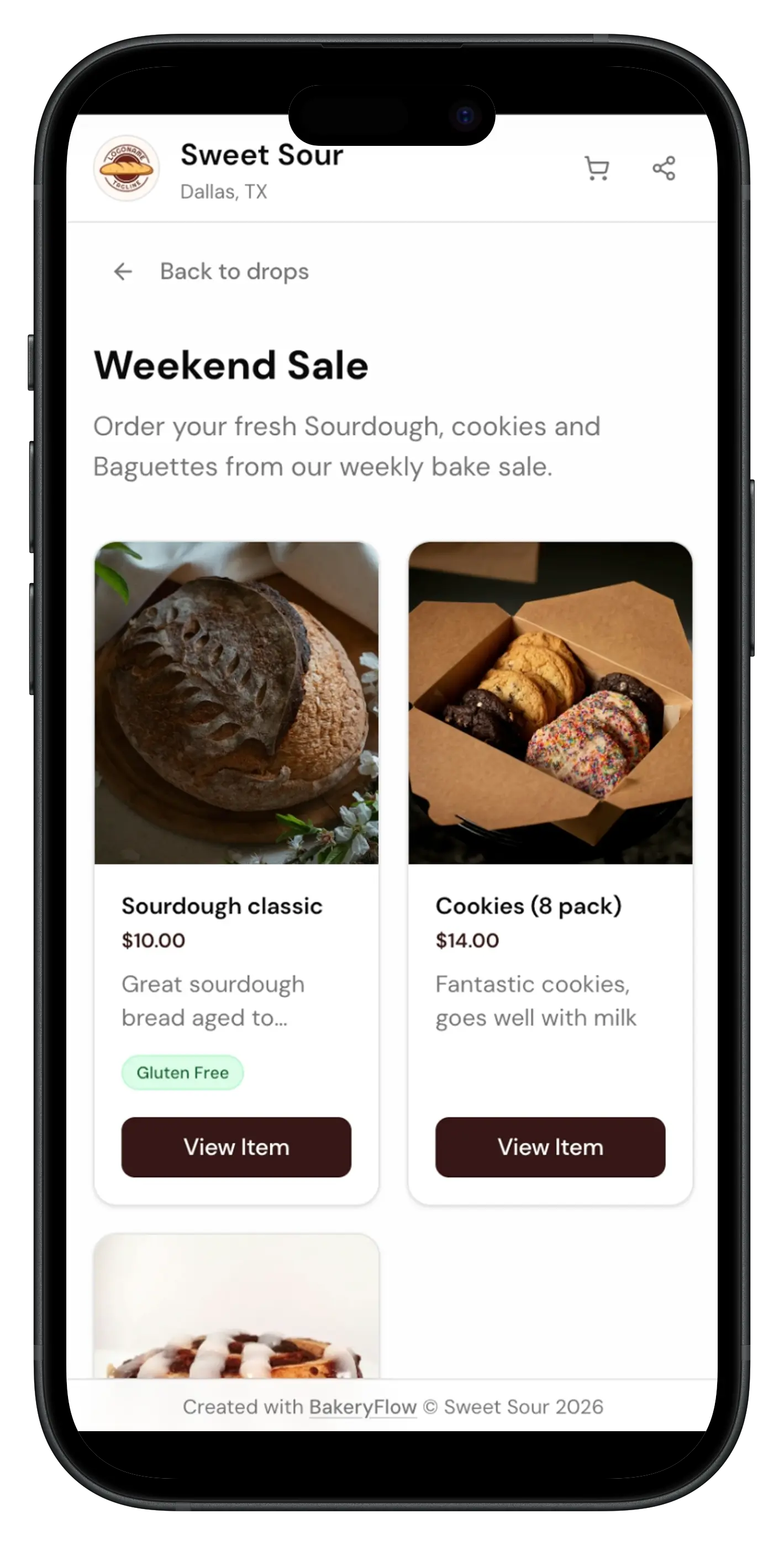
Starting a home bakery?
BakeryFlow is a phone app for home bakers. Share one storefront link, take pre-orders, then bake exactly what sold.
1-month free trial, then $6.99/month or $59.99/year.
Labeling Requirements
- Statement: 'NOT FOR RESALE PROCESSED AND PREPARED WITHOUT STATE INSPECTION'
- Your name, physical address or PO box, and phone number
- Date the product was made
- Product name
- Ingredient list, including sub-ingredients, in descending order by weight
- Net weight
- Allergen information (if applicable)
Legible font size
The exemption details go on the principal display panel (the front of the package). For items too small to label, or sold to eat on site, a sign where you sell can show the same information.
Production & Kitchen Requirements
Virginia cottage food operations must follow specific production rules to ensure food safety.
- All products must be made in your primary residence kitchen
- Kitchen must be maintained in a clean and sanitary condition
- Pets should be kept out of the kitchen during food production
- Use potable (drinking quality) water for all food preparation
- Store ingredients properly to prevent contamination
- Maintain proper refrigeration temperatures (below 41°F)
- Wash hands thoroughly before and during food preparation
- Use clean utensils, equipment, and food-contact surfaces
- Keep accurate records of production dates and sales
- Do not prepare cottage foods at the same time as potentially hazardous foods
Where & How You Can Sell
Allowed Sales Channels
Sell from home, at farmers markets, at events, or anywhere else in Virginia.
Take orders online or by phone from people in Virginia.
⚠️ Buyers must be in Virginia
Deliver in person, by mail, or with a delivery service.
⚠️ Only to people in Virginia
Prohibited Sales Channels
Products must be for the buyer's own use, not for resale or consignment.
Exempt home foods can't be sold for use in retail food establishments.
The exemption covers sales to people in Virginia only.
Additional Exemptions
- Nonprofit organizations holding one-day food sales are exempt from VDACS permits and inspection
- Pure honey from your own hives is exempt if you sell less than 250 gallons a year and label it 'PROCESSED AND PREPARED WITHOUT STATE INSPECTION. WARNING: Do Not Feed Honey to Infants Under One Year Old.'
Violations & Enforcement
The exemption only covers foods sold the way the law describes. Outside it, you need a VDACS permit, and VDACS can inspect any home if it gets a consumer complaint. Penalties depend on the case, so ask VDACS if you're unsure about a rule.
Penalty: Needs a VDACS permit; selling without one can lead to enforcement action
Penalty: Can lead to enforcement action until labels are fixed
Penalty: Needs a VDACS permit; selling without one can lead to enforcement action
Penalty: Investigation by VDACS or the health department, and possible civil liability
Frequently Asked Questions
Not from the state for exempt home foods like baked goods. Virginia's home food exemption needs no registration, permit or fee from VDACS. Your city or county may still require a business license or home occupation permit, so check locally. Registering a business name is optional.
Yes, if the buyer is in Virginia. Since the 2026 change to Va. Code § 3.2-5130, you can sell online or by phone and deliver in person, by mail or by a delivery service within the state.
No. The home exemption covers labeled products sold for the buyer's own use. VDACS says catering businesses should contact the Virginia Department of Health.
The exemption is for food the resident makes in their own private home. VDACS's guidance doesn't cover helpers, so ask VDACS before anyone else makes food for your business.
Some food is taxed and some is exempt in Virginia. Check with the Virginia Department of Taxation (Virginia Tax) and register for a sales tax permit if your products are taxable.
Yes, as long as it's your primary residence. However, check your lease agreement as some landlords prohibit home-based businesses.
List all ingredients in descending order by weight. If a product contains any of the 9 major food allergens (milk, eggs, fish, crustacean shellfish, tree nuts, peanuts, wheat, soybeans and sesame), name them on the label, for example in a 'Contains:' statement.
Getting Started Checklist
Follow these steps to launch your Virginia cottage food business:
- Choose your product(s) from the allowed foods list
- Perfect your recipes and test them with friends/family
- Design and print labels with all required information
- Set your prices (factor in ingredients, time, and packaging)
- Check with Virginia Tax whether your products are taxable, and register if they are
- Consider getting liability insurance
- Set up a simple bookkeeping system to track income and expenses
- Find your first sales venue (farmers market, online, etc.)
- Start small and scale as you gain experience
Scaling Beyond Cottage Food
If your business outgrows the cottage food law, consider these options:
- Rent time in a commercial kitchen or shared-use facility
- Apply for a retail food establishment license
- Build or lease your own commercial kitchen space
- Partner with a co-packer for larger production runs
- Explore wholesale opportunities with proper licensing
Official Resources
Starting a home bakery?
BakeryFlow is a phone app for home bakers. Share one storefront link, take pre-orders, then bake exactly what sold.
1-month free trial, then $6.99/month or $59.99/year.
Compare Cottage Food Laws in Other States
Taking pre-orders in Virginia? See the home bakery app for Virginia bakers.