
Start your cottage food business in Indiana
Indiana's home-based vendor law lets you sell shelf-stable homemade food to customers in Indiana with no sales cap and no permit. You need a food handler certificate.
Last reviewed October 15, 2026 against 6 official sources
Know the rules? Run the bake day in BakeryFlow.
Plan the menu, take pre-orders, and bake from one list. That is what this home bakery app is built for. When you turn on tax, use the sales tax guide to find your official rate source.
Indiana Cottage Food Law Overview
Indiana calls home bakers home-based vendors (HBVs). The law (IC 16-42-5.3, updated by HEA 1149 in 2022) lets you make shelf-stable food at home and sell it directly to consumers in Indiana, including online and by mail.
No annual sales cap
No state permit or registration
ANSI-accredited food handler certificate required
No routine inspections
Direct to consumers in Indiana only, including shipping within the state
What You Can (and Can't) Sell
- Baked goods (cookies, cakes, cupcakes, breads, muffins, cake pops)
- Candy and confections (chocolates, fudge, caramels, hard candy)
- Fruit pies made with high-acid fruit, and pecan pies
- Full-sugar jams, jellies and preserves made from high-acid fruit
- Honey, maple syrup, molasses and sorghum
- Nut butters, roasted and candied nuts
- Roasted coffee beans, dried herbs, spices and teas
- Granola, trail mix, popcorn and crackers
- Dried pasta and egg noodles
- Foods that need refrigeration (time/temperature control for safety, or TCS)
- Meat products
- Cheesecake, cream and custard pies, and pastry-cream fillings
- Homemade buttercream, unless it's commercially made and shelf-stable or follows a lab-tested recipe
- Pickled, acidified and fermented foods (pickles, salsa, pepper jelly, hot sauce)
- Low-sugar or no-sugar jams
- Raw milk, CBD or delta-8 products, and dietary supplements
- Pet treats (regulated by the Office of Indiana State Chemist)
Sales Limits & Locations
No annual sales cap
Indiana's home-based vendor law has no annual sales limit.
- In person, including farmers markets, roadside stands, fairs and festivals
- By phone or online
- Delivered in person, by mail or by a shipping carrier within Indiana
- Sell only directly to the end consumer
- Can't sell to stores, restaurants, wholesalers or food banks
- Can't ship or deliver to customers outside Indiana
- Ship in sealed, tamper-evident packaging
- Keep the shipping or delivery address for each sale for at least one year
Comparing states? See sales limits in every state we cover.
Requirements & Regulations
No state permit or registration. Give a copy of your food handler certificate to the local health department in your county.
No routine inspections. The health department can inspect after a complaint, or if a product is misbranded or adulterated.
Get a food handler certificate from an ANSI-accredited issuer and show it to the state or a customer on request.
Not required by law, but some farmers markets ask for proof of liability insurance.
Check with your city or town about zoning rules for home-based businesses.
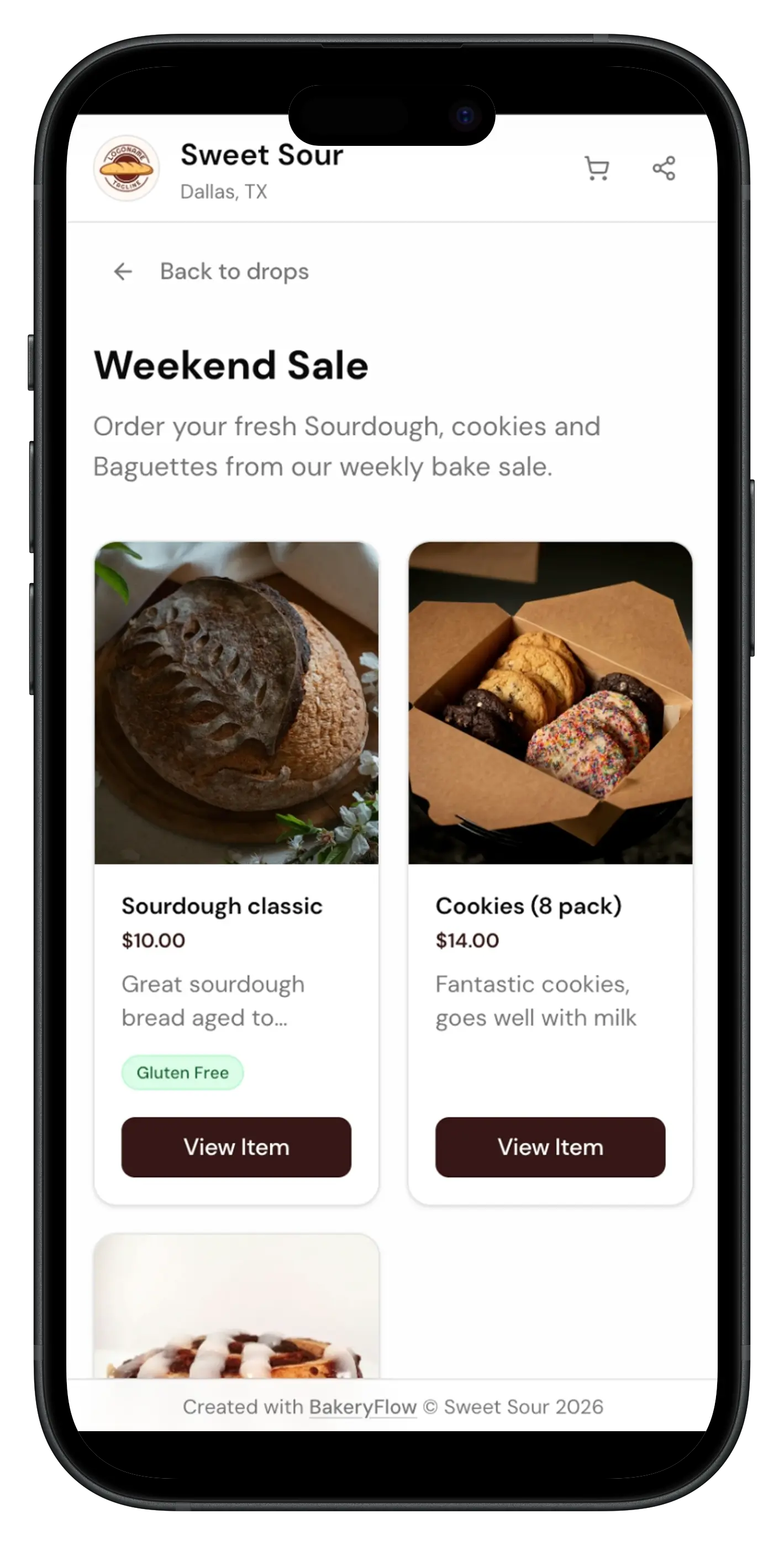
Starting a home bakery?
BakeryFlow is a phone app for home bakers. Share one storefront link, take pre-orders, then bake exactly what sold.
1-month free trial, then $6.99/month or $59.99/year.
Labeling Requirements
- Your name and home address (a PO box doesn't count)
- Common or usual name of the product
- Ingredients in descending order by weight
- Net weight, volume or count
- Date the product was processed
- Statement in at least 10-point type: 'This product is home produced and processed, and the production area has not been inspected by the state department of health. NOT FOR RESALE.'
The required statement must be at least 10-point type
Put a label on packaged food or a sign next to unpackaged food. If you sell online, post each product's label on your website.
Production & Kitchen Requirements
IC 16-42-5.3 sets these rules for home-based vendors.
- Make products at your primary residence (a permanent structure on the same property also counts)
- Wash hands properly and keep good personal hygiene
- Sanitize the containers and packaging your food goes in
- Store food products safely
- Keep animals out of the area where you prepare or package food
- Clean and sanitize surfaces that touch food
- Use only pasteurized milk in baked goods
Where & How You Can Sell
Allowed Sales Channels
Sell in person at markets, roadside stands, fairs and festivals.
⚠️ Event organizers decide whether to allow home-based vendors. A market can't require a food license, but may ask for your food handler certificate.
Customers can order in person, by phone or online and pick up from your home.
⚠️ Check local zoning rules for home-based businesses.
Sell through your own website, social media or marketplaces to customers in Indiana.
⚠️ Post each product's label online. Deliver in person, by mail or by carrier within Indiana, and keep delivery records for one year.
Prohibited Sales Channels
Products must go directly to the end consumer. Selling through a store counts as wholesale and needs a permit and an inspected kitchen.
Products can't be sold to a wholesaler, distributor or anyone who will resell them.
You can't ship or deliver to a customer outside Indiana.
Additional Exemptions
- Vendors at a farmers market or roadside stand who sell eggs, whole uncut produce, or shelf-stable food are exempt from food establishment rules.
- Poultry and rabbit meat can be sold at farmers markets and roadside stands under separate conditions, such as being frozen at the point of sale.
- Local governments can't require licensing, certification or inspection of home-based vendor food.
Violations & Enforcement
Local health departments enforce the home-based vendor law, following Indiana Department of Health guidance.
Penalty: You can be treated as an unlicensed retail food establishment under Indiana's food establishment rules.
Penalty: The health department can sample your products and inspect your kitchen.
Penalty: The state can order you to stop making and selling the product until the problem is fixed.
Frequently Asked Questions
Indiana doesn't require a food permit or registration for home-based vendors, but you need a food handler certificate and must give a copy to your local health department. Your city or county may still require a business license or home-occupation permit, so check locally. Registering a business name is optional.
Yes, to customers in Indiana. Post each product's label on your website, ship in sealed tamper-evident packaging, and keep each customer's shipping or delivery address for at least one year. You can't ship outside Indiana.
No. Home-based vendors can only sell packaged, shelf-stable food directly to the end consumer. Prepared foods like ready-made meals need a permitted, inspected food establishment.
The Indiana Department of Health says home-based food must be sold by the producer, who needs a food handler certificate, and others can't sell on your behalf. Check with your local health department before adding helpers.
It depends on what you sell. Indiana generally exempts food from sales tax. Bakery items like bread, cakes, cookies and pies are exempt unless you provide eating utensils, but candy and soft drinks are taxable. Check with the Indiana Department of Revenue and register for a sales tax account if you sell taxable items.
Yes, if it's your primary residence. Check your lease, since some landlords don't allow home-based businesses.
Indiana's home-based vendor law doesn't require allergen labeling, but the Department of Health encourages it. List all ingredients in descending order by weight. If a product contains any of the 9 major food allergens (milk, eggs, fish, crustacean shellfish, tree nuts, peanuts, wheat, soybeans and sesame), name them on the label, for example in a 'Contains:' statement.
From July 1, 2026, HEA 1424 (IC 16-42-5.4) added homestead vendor and small farm categories. They allow more foods, such as prepared foods and some meat products, sold from your property, at farmers markets, online or by delivery, with a $1.5 million annual gross sales limit. The home-based vendor rules on this page still apply. Ask your local health department which option fits you.
Getting Started Checklist
Follow these steps to launch your Indiana home-based food business:
- Check that your products are shelf-stable and allowed for home-based vendors
- Get a food handler certificate from an ANSI-accredited issuer
- Give a copy of your certificate to your county's local health department
- Design labels with all required information
- Set your prices (factor in ingredients, time, and packaging)
- Check whether any products are taxable and register with the Indiana Department of Revenue if they are
- Consider getting liability insurance
- Set up a simple bookkeeping system to track income and shipping records
- Find your first sales venue (farmers market, online, a local festival)
Scaling Beyond Cottage Food
If your business outgrows the home-based vendor law, consider these options:
- Rent time in a commercial kitchen or shared-use facility
- Apply for a retail food establishment permit
- Build or lease your own commercial kitchen space
- Partner with a co-packer for larger production runs
- Explore wholesale opportunities with proper licensing
Official Resources
Starting a home bakery?
BakeryFlow is a phone app for home bakers. Share one storefront link, take pre-orders, then bake exactly what sold.
1-month free trial, then $6.99/month or $59.99/year.